Robert Morgan Organ
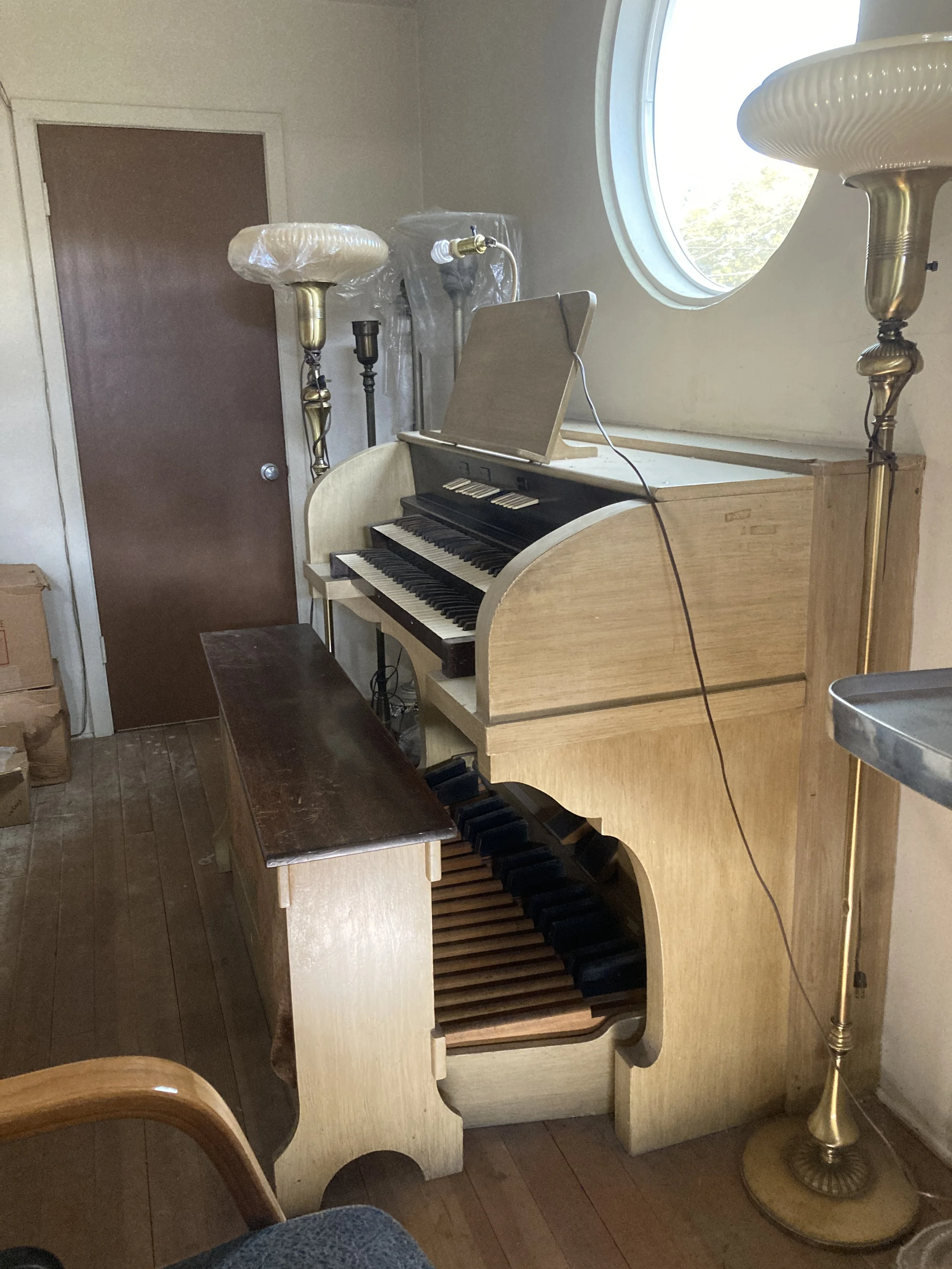
This organ was built by the Robert Morton Organ Company, and is opus 2541. It is located in the Lima Family Erickson funeral home. No manufacture date is listed, but it was likely built in early 1930 since that is the date of the first tuning note below the expression shades. Since the funeral home was founded in 1945, this is likely not the original home for the organ.
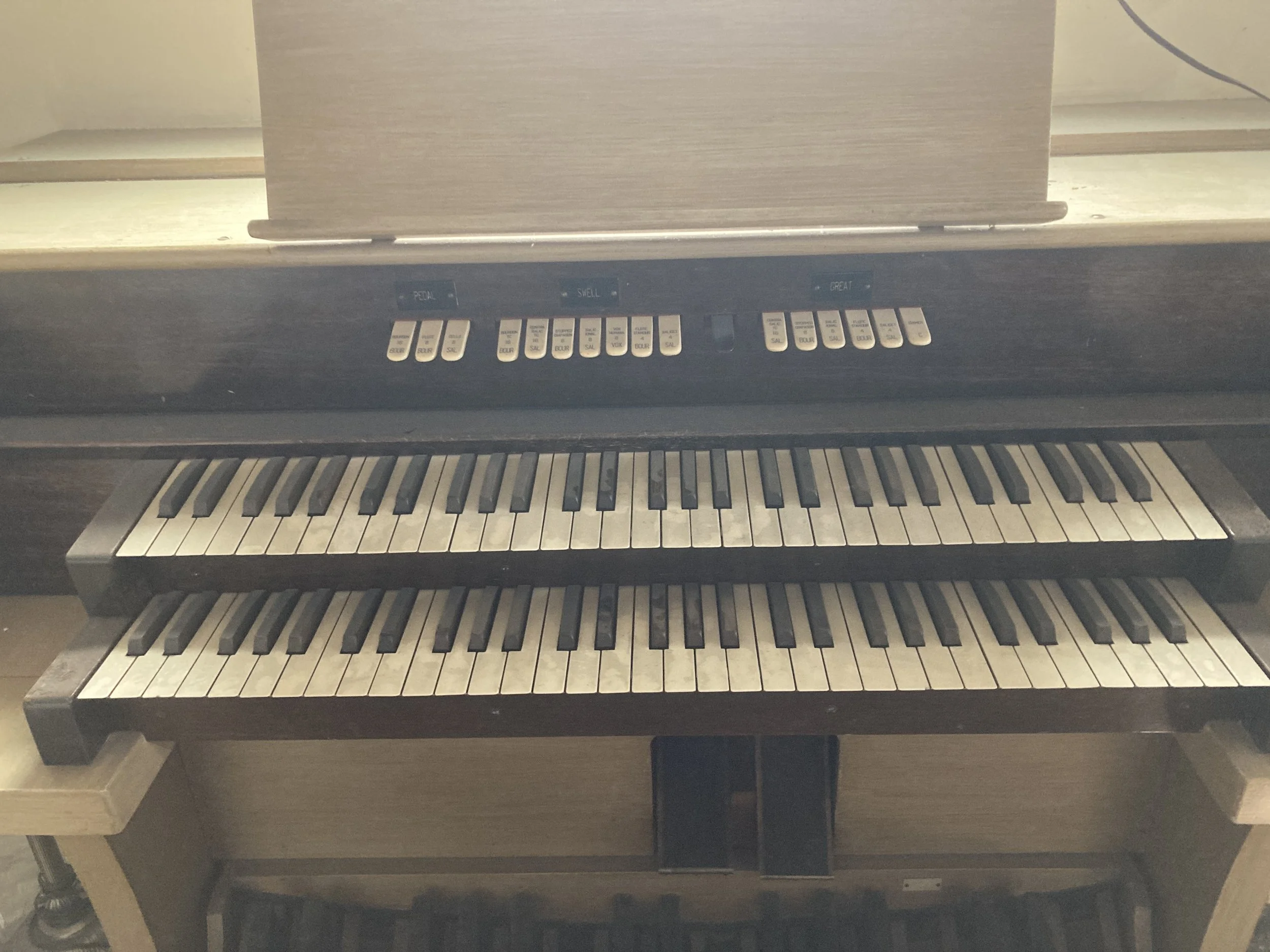
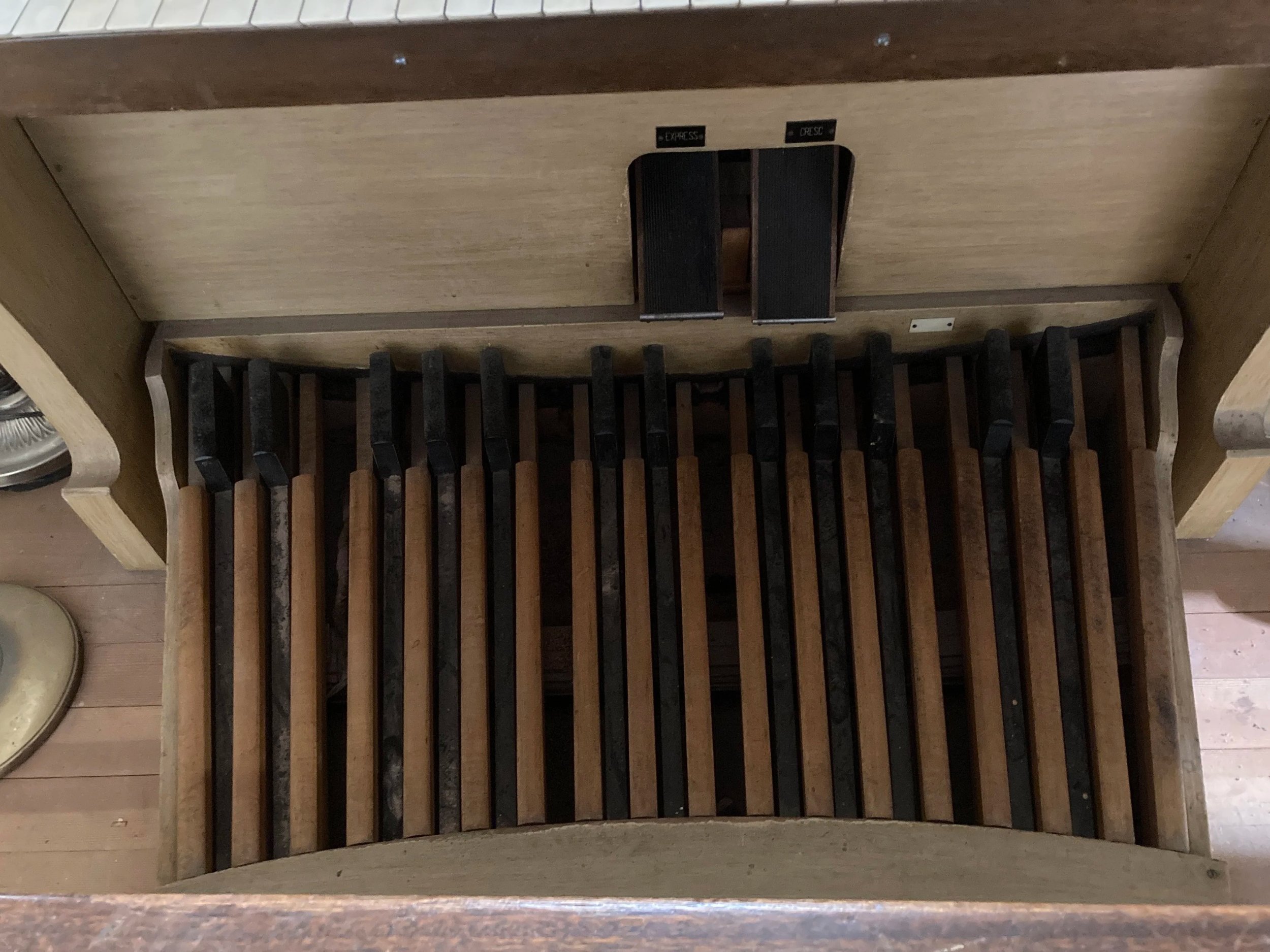
This is a small electropneumatic instrument, two manual, 16 stop, ~3 rank organ with a ~2 octave chime set on the Great. The keys are wood veneer for the sharps and ivory for the naturals and are in good condition. The pedal board has 30 notes (C2 to F4) and seems to be miniaturized to some extent (~45 in wide just below the sharps, the Bass C is ~27 in long). The entire organ is tucked into a closet-like set of rooms up some stairs and to the side of their old chapel and is entirely under expression (it is currently mounted up some stairs in a small storage(?) room to the upper left of the old chapel). The shades seem to work pretty well in their current state, but would need a few adjustments to fully close. There is also a crescendo pedal.
Most of the organ is unified as marked on the stop tabs (see below at the bottom) and generally confirmed through experimentation. Each 8' rank besides the Vox Humana has extensions up and down to 4' and 16' pitch. Middle D cifers on the pedal only for the bourdon/flute, strange since the manuals use the same pipe but do not cifer on that note. The tremolo is pretty agressive and affects the whole organ.
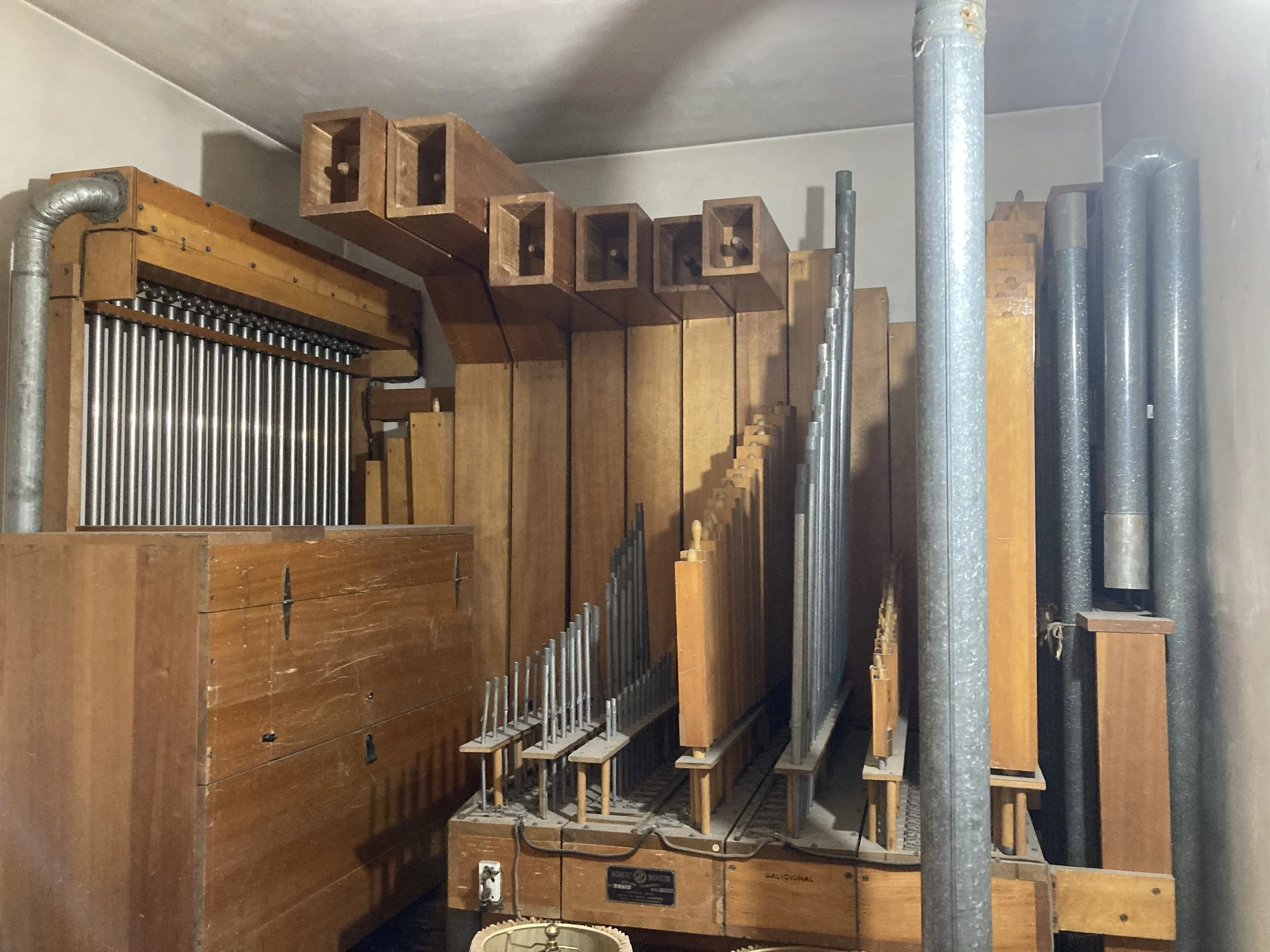
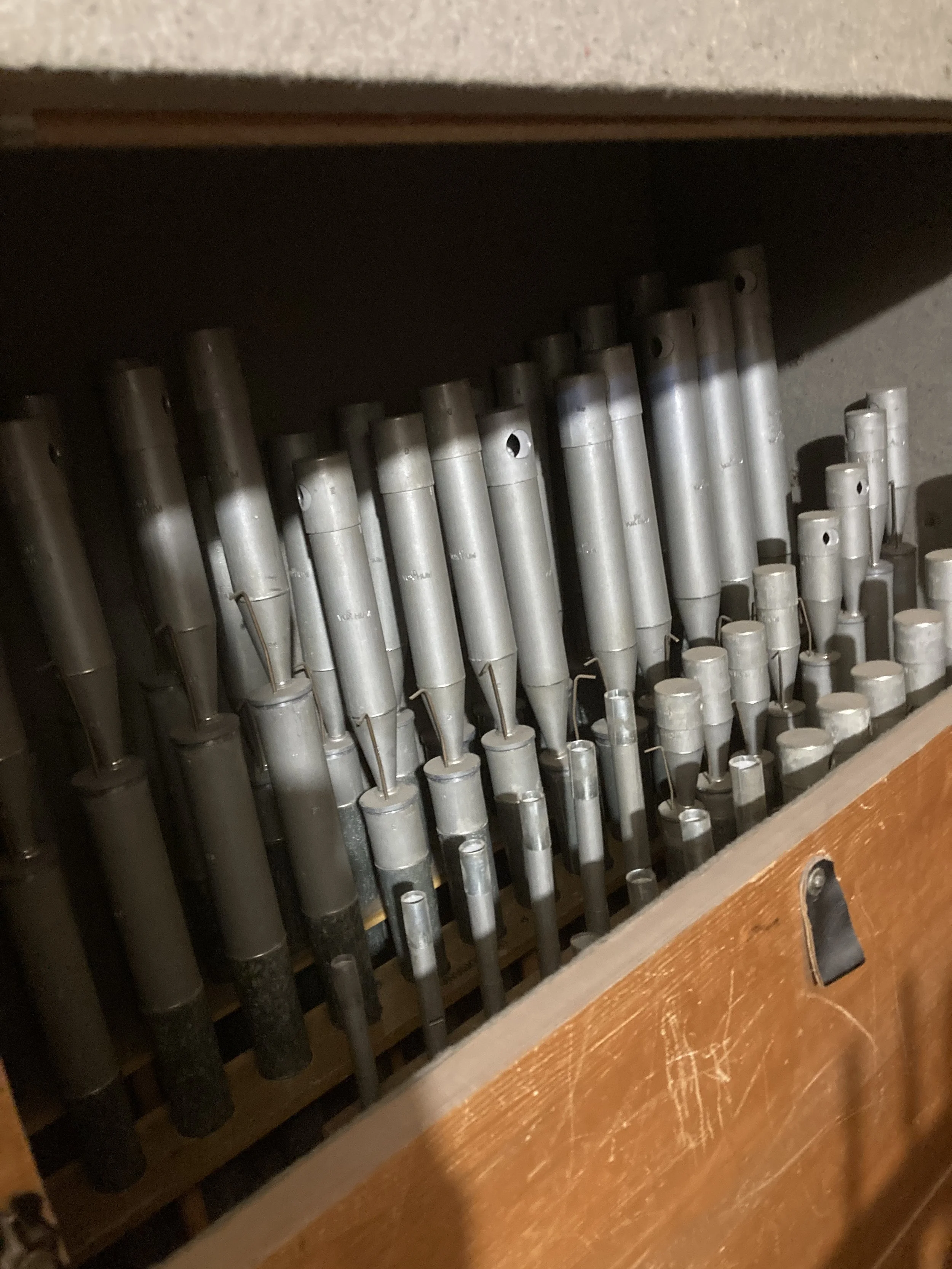
About a third of the pipes work right now. Fewer pipes work on the pedalboard and only a handful of notes on the chimes. The pipes seemed well-seated. The pipes generally seemed in good shape; two or three pipes were bent over some, about a 60 degree angle -- maybe they had something set on them at one point. Another rank (the Bourdon) the pipes progressively lean to the side. The rest of the pipes seem in good condition and are standing straight and fairly evenly. One rank of reeds is completely enclosed in a box below the chime set. On the whole, the instrument seems in pretty good shape. I think a good cleaning to get the dust out of the pipes would fix most of the issues.
The windtrunks all seem to be made of metal ducting. There seem to be no visible cracks or leaks and there is no detectable hiss of an air leak within the pipe chamber. The visible leather on the bellows and for valves and such seems to be in good shape.
The organ is located up a flight of very steep, narrow stairs that make a half-turn while going up. The pipes and chests would come out and down the stairs fairly easily, but the console would likely be difficult and may need to be disassembled to get it down.
This instrument would make a great practice instrument, either in a home (since it's so tiny) or if there is a local university looking for a practice instrument. The funeral home want to save the instrument from the landfill, and they don’t seem to expect to make much off it.
Contact Veronica Jordan for more information and to view the instrument.
Some pictures are shown below, and there are more available here.
This description lightly edited from notes by Chapter member Ruth Kamas, who also took the pictures. Very many thanks Ruth.